In 2026, the question “how does energy storage support sustainable energy development” matters whenever sunshine fades or wind speeds drop. A battery beside a solar farm can hold midday electricity and release it after sunset. At a neighborhood scale, home batteries can help power lights, refrigerators, and heat pumps during peak demand. Storage does not generate clean energy. It helps make variable renewable power more useful and dependable.
Francesco La Camera, Director-General of the International Renewable Energy Agency, has described energy storage as “a key enabler of the energy transition.” The idea is practical: store electricity when supply is plentiful, then use it when demand rises. Batteries are only part of the picture. Pumped hydropower, thermal storage, and other technologies can serve different durations, locations, and grid needs. The best option depends on local resources, infrastructure, and cost.
That matters. Yet storage is not a simple fix. Batteries require materials, careful manufacturing, and responsible end-of-life planning. Long-duration storage can also remain expensive or difficult to deploy in some places. A sustainable strategy must weigh those trade-offs, alongside grid upgrades and energy efficiency. This article explores how storage can smooth renewable supply, support reliable electricity, and reduce wasted clean power. It also asks where storage makes sense—and where it may not. The answer is not identical for every community. That is worth remembering.
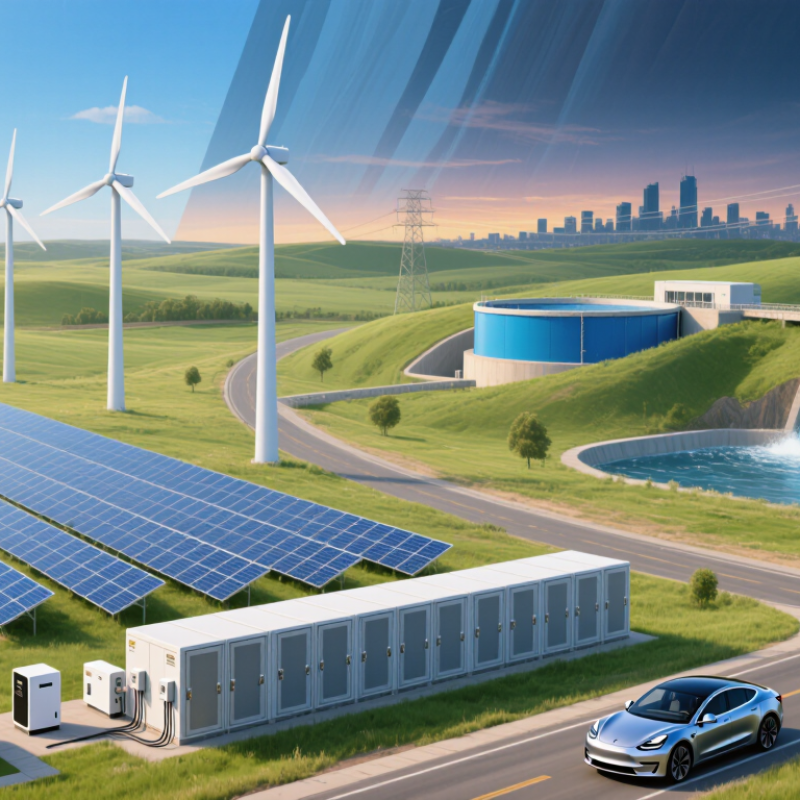
How Energy Storage Works in Sustainable Energy Systems
Energy storage makes variable renewable power more controllable. Solar panels produce at noon, while homes often peak after sunset. A battery charges during surplus hours and discharges when demand rises. Power electronics manage voltage, frequency, and safe bidirectional flow. Thermal storage can shift heat, while pumped hydropower moves water between reservoirs. Each technology solves a different timing problem. It does not create energy. It moves energy through time.
The scale is accelerating. The IEA’s Batteries and Secure Energy Transitions report says global battery-storage additions reached about 42 gigawatts in 2023, rising 130% year on year. IRENA recorded 473 gigawatts of renewable capacity added that year. More variable generation requires better flexibility. Storage can reduce curtailment and support grids during short disturbances. Yet performance depends on temperature, cycling, connection delays, and mineral supply. NREL’s 2024 Annual Technology Baseline models roughly 85% round-trip efficiency for utility-scale lithium-ion batteries. Some energy is always lost. The picture is not perfectly tidy.
Tips: Match storage duration to the job. Use short-duration batteries for evening peaks and fast frequency response. Consider thermal or pumped storage for longer shifts. Check round-trip efficiency, degradation, fire protection, and recycling plans before comparing costs. Measure results at the connection point, not only inside the battery. A storage project may look efficient on paper, but weak controls can waste renewable power. That is an uncomfortable detail worth reviewing.
How Does Energy Storage Support Sustainable Energy in 2026?
Global battery storage additions, 2020–2024
Battery storage helps sustainable energy systems absorb surplus solar and wind power, shift electricity to periods of higher demand, and improve grid flexibility. Global annual battery storage additions increased from approximately 5 GW in 2020 to 63 GW in 2024, showing the rapid expansion of storage alongside renewable energy deployment.
Source: International Energy Agency, Global Energy Review 2025 and Batteries and Secure Energy Transitions. Values are rounded global annual additions.
Major Energy Storage Technologies Used in 2026
In 2026, lithium-ion batteries remain the main technology for daily solar and wind balancing. They respond within milliseconds, making them useful for frequency control and evening demand peaks. BloombergNEF reported about 45 GW and 97 GWh of new stationary storage additions in 2023. The market is growing quickly. However, mineral supply, fire safety, recycling, and degradation remain practical concerns. A battery is not automatically sustainable.
Pumped-storage hydropower provides long-duration capacity, often lasting six to twelve hours. It uses reservoirs and mature turbine systems, but suitable sites are limited. Flow batteries offer longer cycling with lower fire risk. Their tanks can be expanded separately from power equipment. Sodium-ion batteries may reduce dependence on scarce minerals, although their energy density is still lower. Compressed-air and thermal storage can also support industrial loads and multi-hour renewable output.
Hydrogen storage serves a different role. It may preserve surplus electricity for seasonal use, especially where underground storage is available. Its round-trip efficiency is weaker than batteries. That matters. The International Energy Agency’s 2024 battery analysis says global battery storage capacity must expand roughly fourteenfold by 2030 in a net-zero pathway. This target highlights both urgency and uncertainty. Grid planners should combine technologies rather than select one universal solution. Local geography, cycling frequency, water availability, and end-of-life recovery will decide whether storage genuinely supports sustainable energy.
How Storage Balances Renewable Energy Supply and Demand
In 2026, renewable electricity will face a practical timing problem. Solar output peaks around noon, while households often demand more power after sunset. Wind can surge overnight, then fade before morning. Energy storage moves electricity across these mismatched hours. That simple shift matters.
The International Energy Agency reports that global battery storage capacity must grow from about 85 GW in 2023 to 1,200 GW by 2030 under its net-zero pathway. A four-hour battery can absorb midday solar and discharge during dinner demand. Pumped hydropower, thermal storage, and other long-duration systems can address longer gaps. The IEA’s Batteries and Secure Energy Transitions report also identifies storage as a tool for reducing curtailment and strengthening grid flexibility.
The challenge is not only building more capacity. IRENA’s Renewable Capacity Statistics 2025 records 585 GW of renewable capacity added worldwide in 2024. More variable generation increases the value of accurate forecasts, flexible demand, and strategically placed storage. Still, storage cannot solve every shortfall. A battery sized for an evening peak may empty during a cloudy, windless week. Transmission, demand response, and market rules must work beside it. My concern is practical: projects are often measured by megawatts, while reliability depends on duration, location, and dispatch timing. That weakness deserves harder scrutiny in 2026.
Benefits of Storage for Grids, Communities, and Industry
Energy storage turns surplus electricity into a resource people can use later. On a windy night, batteries can hold power for the morning commute. During a heatwave, they can discharge when air conditioners push demand upward. The International Energy Agency reported that battery storage in the power sector added about 42 gigawatts worldwide in 2023, more than in any previous year. Its 2024 report, Batteries and Secure Energy Transitions, says global battery capacity must grow sixfold by 2030 in a pathway aligned with net-zero emissions. That is a steep buildout. Batteries help grids balance variable wind and solar, but they do not replace transmission lines, flexible generation, or careful planning.
Communities can use storage to keep critical services running through brief outages, especially when batteries are paired with local solar and configured for emergency loads. A clinic might reserve power for refrigerators, lights, and communications. The U.S. Department of Energy’s 2023 report, Pathways to Commercial Liftoff: Long Duration Energy Storage, highlights storage’s potential to improve reliability and support a cleaner grid. For industry, stored electricity can reduce exposure to high-demand periods and smooth the supply available to energy-intensive processes. Yet the benefits depend on location, operating rules, and the source of electricity used to charge a system. A battery is not automatically clean. Its materials, replacement cycle, and end-of-life handling also deserve more attention than they often receive.
Key Challenges Shaping Energy Storage Deployment in 2026
In 2026, energy storage is less a single technology than a practical set of choices. A battery beside a solar farm can hold midday electricity for the evening peak. Yet connecting that system to the grid may take longer than installing the equipment. Interconnection queues, limited substation capacity, and changing project requirements can turn a sound design into a delayed one. Timing matters.
Duration is another challenge. A two-hour battery may help manage a brief evening surge, but it cannot cover several cloudy, low-wind days. Longer storage can address that gap, though costs, site needs, and operating experience vary by technology. Project planners need to match storage hours to local demand patterns, not just headline capacity. That sounds obvious; it is often missed.
Materials and end-of-life planning also shape deployment. Developers must consider supply risks, temperature control, fire safety, maintenance access, and how components will be reused or recycled. A containerized system may look compact on a site plan, but crews still need room to inspect equipment and respond safely. Community concerns deserve real answers, not polished assurances. Economics remain uncertain, too: electricity prices, grid services, and financing terms can shift a project’s value. No forecast is perfect. More transparent operating data and careful site-level assessment can help decision-makers compare options without treating storage as a universal fix.
FAQS
Solar often peaks around noon, while household demand rises after sunset. Storage shifts some electricity into the evening. That helps, but it cannot cover every shortage.
They respond within milliseconds and can help manage frequency changes and evening peaks. A four-hour system can store midday solar for dinner-time demand. Battery lifespan and fire safety still need attention.
Usually not by themselves. A battery sized for one evening may run empty during several calm, cloudy days. That limitation is easy to overlook.
Pumped hydropower can often deliver electricity for six to twelve hours. Flow batteries, compressed-air systems, and thermal storage can also support longer operating periods. Site conditions matter.
They may reduce reliance on some scarce minerals. Their energy density is lower, so a system may need more space. Not a perfect swap.
It may preserve surplus electricity for seasonal use, especially where underground storage is available. Its round-trip efficiency is weaker than batteries. That matters.
One net-zero pathway calls for global battery capacity to rise from about 85 GW in 2023 to 1,200 GW by 2030. That is a demanding target, not a guarantee.
Transmission, demand response, and accurate forecasts can help balance supply and demand. Planners should consider duration, location, and dispatch timing, not just megawatts. I may be missing local details here.
Conclusion
Energy storage supports sustainable energy systems by capturing electricity when renewable sources such as wind and solar produce more than is immediately needed, then releasing it when generation falls or demand rises. In 2026, systems may use batteries, pumped hydropower, thermal storage, and other approaches, each suited to different durations and needs. Together, these technologies help align variable renewable supply with household, commercial, and industrial demand, reduce pressure on power grids, and make clean electricity more dependable.
Understanding how does energy storage support sustainable energy development also means recognizing its broader benefits and limitations. Storage can improve grid flexibility, support local energy resilience, and help industries use energy more efficiently. However, wider deployment depends on addressing costs, material availability, environmental impacts, infrastructure needs, and safe operation. Careful planning and continued innovation can help ensure storage complements renewable generation and delivers reliable benefits to communities and energy systems.

 Symbion Energy