How to Choose the Right Energy Storage Solution?

Time:2026-10-28 Author:Sophia
0%

Choosing how to store energy can feel like comparing identical metal boxes. They are not identical. Chemistry, capacity, operating temperature, response speed, safety controls, and replacement cycles can change the result dramatically. That is why how to choose the right energy storage solution begins with the site, not the product brochure.

Dr. Imre Gyuk, a leading energy-storage expert at the U.S. Department of Energy, has stated, “Energy storage is the key to making renewable energy reliable.” His observation remains practical for homes, factories, hospitals, and utility projects. A rural solar farm may need four hours of evening discharge. A hospital may value instant backup and dependable maintenance more than maximum energy density. A warehouse might prioritize peak-demand reduction during hot afternoons.

Start with measurable questions. What load must remain online? For how many hours? How often will the system cycle? Will temperatures fall below freezing? Can technicians reach the equipment easily? Lithium-ion batteries often provide strong efficiency and compact installation. Flow batteries may suit longer-duration applications, although their footprint can be larger. Thermal storage, pumped hydro, and other technologies may also deserve consideration.

The numbers can surprise you.

Purchase price alone is a weak guide. Round-trip efficiency, degradation, software quality, warranties, fire protection, recycling plans, and grid-interconnection requirements also affect lifetime value. A spreadsheet may still mislead when future electricity prices change. That uncertainty deserves honest attention. The best decision combines verified performance data, experienced engineering review, transparent supplier support, and a realistic operating plan. In practice, how to choose the right energy storage solution means balancing resilience, cost, safety, and the demands of one specific site.
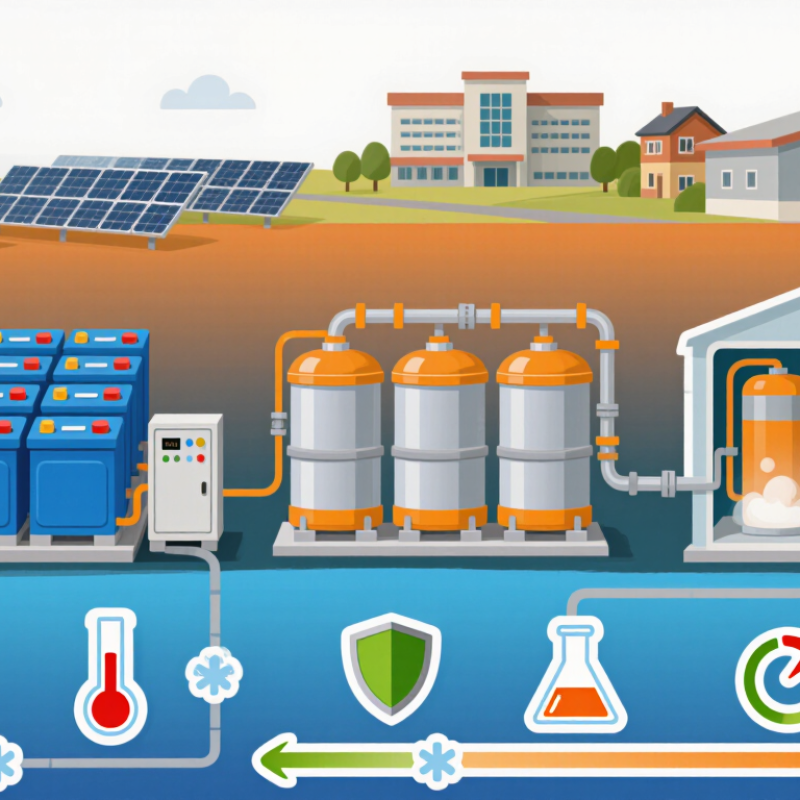
How to Choose the Right Energy Storage Solution?

Define Your Energy Storage Needs and Objectives

How to Choose the Right Energy Storage Solution?

Define Your Energy Storage Needs and Objectives

Choosing storage starts with a clear operating problem, not a technology preference. Identify your load profile, peak demand, outage risks, and renewable generation pattern. A factory may need two hours of peak shaving. A remote site may need overnight backup. These are different design tasks. The International Energy Agency reported that global battery storage additions exceeded 40 GW in 2023. Its 2024 outlook says storage capacity must expand sixfold by 2030 for a net-zero pathway. Scale matters, but purpose matters more.

Measure energy in kilowatt-hours and power in kilowatts. Then define the required discharge duration. Compare round-trip efficiency, response time, cycle life, degradation, space, temperature exposure, and maintenance needs. Safety requirements and local grid rules must guide the shortlist. The U.S. National Renewable Energy Laboratory emphasizes lifetime cost, performance, and operating conditions in storage evaluations. Cheap capacity can become expensive after frequent cycling. That lesson is easy to miss.

Tips: Collect fifteen-minute load data for at least twelve months. Model normal days and difficult days. Include future electrification plans. Ask what happens during a prolonged outage. Leave room for uncertainty. A forecast can be wrong. This is where careful sensitivity testing protects the investment.

Compare Energy Storage Technologies and Their Capabilities

Choosing an energy storage solution requires more than comparing capacity and price. Lithium-ion systems respond within milliseconds, making them useful for frequency control and short peak periods. They often deliver 85–95% round-trip efficiency, but performance can decline with heat, cycling, and age. Careful thermal management is essential.

Flow batteries usually respond more slowly, yet their separate power and energy components support longer discharge periods. They can suit daily renewable shifting, especially where land and maintenance access are available. Pumped hydro offers very large capacity and long service life, but it needs suitable elevation, water resources, and major construction. Compressed-air storage can also provide extended duration, although geology and efficiency may limit practical locations.

Hydrogen storage serves different needs. It can retain energy for weeks or seasons, but converting electricity into hydrogen and back involves substantial losses. Thermal storage may work well beside industrial heat demand, even when it is less suitable for electricity supply. A spreadsheet can mislead. The best technology depends on response time, discharge duration, cycling frequency, safety controls, site conditions, and grid requirements. It is easy to rank systems by efficiency alone; that comparison is incomplete. A lower-efficiency system may still be valuable if it stores surplus power for several cloudy days. Engineers should test real operating profiles, include degradation assumptions, and verify safety requirements before selecting equipment.

How to Choose the Right Energy Storage Solution? – Compare Energy Storage Technologies and Their Capabilities

Typical values are technology-level ranges and vary with system design, operating conditions, ambient temperature, controls, and project requirements.
Evaluation Dimension Lithium-Ion Battery Lead-Acid Battery Vanadium Redox Flow Battery Sodium-Ion Battery Thermal Energy Storage
Primary Storage Medium Electrochemical cells using lithium-based cathodes and graphite or other anodes Electrochemical cells using lead dioxide, lead, and sulfuric acid electrolyte Liquid electrolytes stored in external tanks and circulated through electrochemical stacks Electrochemical cells using sodium-based cathodes and commonly hard-carbon anodes Sensible heat, latent heat, or thermochemical energy stored in a thermal medium
Typical Energy Duration Approximately 0.5–4 hours; longer durations are possible with additional capacity Approximately 0.5–4 hours, with performance depending strongly on discharge rate Approximately 4–12 hours or more; energy duration can be increased by enlarging the tanks Approximately 1–6 hours in current grid-oriented applications Minutes to several days, depending on the storage medium, insulation, and application
Typical Round-Trip Efficiency Approximately 85–95% Approximately 70–85% Approximately 65–85% Approximately 80–90% Approximately 40–90%, depending on whether electricity, heating, cooling, or combined energy output is required
Typical Response Time Milliseconds to seconds Milliseconds to seconds Milliseconds to seconds Milliseconds to seconds Seconds to hours, depending on the charging and heat-transfer system
Typical Power Capability Well suited to high-power applications, subject to cell chemistry, thermal limits, and inverter sizing Suitable for low-to-moderate power; high-rate operation can reduce usable life Suitable for low-to-high power when multiple stacks are installed; power and energy are independently scalable Suitable for low-to-high power applications, with capability depending on cell design and system maturity Usually optimized for thermal loads rather than direct electrical power output
Usable Depth of Discharge Commonly 80–95% with appropriate battery-management controls Commonly 50–80%; frequent deep discharge can shorten service life Typically 70–100%; deep cycling generally has a comparatively limited effect on electrolyte capacity Commonly 80–95%, depending on the cell design and operating controls Often 70–95% of the designed thermal capacity, depending on acceptable temperature range and heat losses
Cycle Life Approximately 2,000–10,000 cycles, depending on chemistry, temperature, depth of discharge, and charging profile Approximately 500–3,000 cycles; premium deep-cycle designs can achieve higher values under controlled conditions Approximately 10,000–20,000 or more cycles; stack and pump maintenance remain important Approximately 2,000–6,000 cycles in reported target and early commercial ranges, depending on chemistry and application Often 5,000–20,000 equivalent cycles; the limit is usually associated with thermal components, insulation, and operating conditions
Calendar Life Typically 10–20 years with suitable thermal management and operating controls Typically 3–12 years, depending on design, temperature, maintenance, and cycling intensity Often 15–25 years, with periodic replacement or servicing of pumps, stacks, and balance-of-plant equipment Potentially 10–20 years; long-term field data is less extensive than for established chemistries Often 15–30 years for well-designed systems; storage-medium degradation varies by technology
Energy Density High: approximately 100–300 Wh/kg at cell level, depending on chemistry Low: approximately 30–50 Wh/kg at cell level Low at system level because tanks, pumps, and electrolytes require substantial space Moderate: commonly below leading lithium-ion chemistries, with values varying by design Highly variable; generally low for direct electricity storage but practical for buildings and industrial heat applications
Safety Considerations Requires battery-management systems, thermal monitoring, electrical protection, and suitable fire-safety design; some chemistries have lower thermal-runaway risk than others Can release hydrogen during charging and contains corrosive electrolyte; ventilation and spill protection are required Low flammability of aqueous electrolytes; pumps, piping, and electrolyte containment require protection against leaks Generally non-flammable electrolyte options are possible, but thermal management and cell-level protection are still required Risks include hot surfaces, pressure, insulation failure, and heat-transfer-fluid leakage; electrical fire risk may be lower when no electrochemical battery is used
Temperature Sensitivity Performance and life decline at high temperatures; charging may be restricted at low temperatures Capacity and charge acceptance decline in cold conditions; high temperatures accelerate aging and water loss Electrolyte viscosity and stack performance vary with temperature; heating may be needed in cold climates Low-temperature performance depends on electrolyte and electrode formulation; thermal controls remain important Strongly dependent on insulation, operating temperature, and the selected thermal medium
Material Availability Uses widely available materials, although supply chains for lithium, nickel, cobalt, graphite, and other materials vary by chemistry Uses mature and widely available lead-based materials; lead recycling infrastructure is established in many regions Uses vanadium electrolyte, which can be exposed to price and supply fluctuations; electrolyte can be recovered and reused Uses abundant sodium and may reduce dependence on lithium, nickel, and cobalt, although supply chains are still developing Often uses readily available materials such as water, molten salts, rocks, concrete, or phase-change materials
Maintenance Requirements Generally low routine maintenance; monitoring, HVAC, fire protection, and periodic component replacement are required Moderate to high; ventilation, electrolyte checks, terminal maintenance, and replacement planning may be necessary Moderate; pumps, valves, sensors, membranes, and stack components require inspection and servicing Generally low routine maintenance, similar to other sealed battery systems Moderate; insulation, pumps, valves, heat exchangers, and thermal-fluid systems require inspection
Space Requirement Low to moderate for the stored energy, making it suitable where land is limited High relative to lithium-ion because of lower energy density and required service clearances High for long-duration storage because of tanks, pumps, stacks, and auxiliary systems Moderate to high, depending on the energy density of the selected cell design Moderate to very high, especially for large insulated tanks or underground thermal storage
Capital Cost Pattern Competitive for short-duration, high-efficiency applications; cost increases with additional duration Lower upfront cost in some applications, but replacement and maintenance can increase lifetime cost Higher balance-of-plant cost, but long duration and independent scaling can improve economics for frequent deep cycling Potentially competitive for stationary storage as manufacturing scales; project pricing varies widely by deployment stage Often attractive for heat and cooling applications, particularly where thermal energy can be used directly
Environmental Profile Recycling is possible, but mining, manufacturing energy, and end-of-life management must be considered Highly recyclable in established systems; lead and sulfuric acid require strict handling and regulated recovery Electrolyte can often be reused, but vanadium extraction and processing have environmental impacts May reduce reliance on constrained battery minerals; recycling pathways are still developing Can have a relatively low material impact when using abundant media, although construction and insulation materials still matter
Best-Fit Applications Frequency regulation, solar and wind shifting, backup power, peak shaving, and electric-vehicle charging support Telecom backup, small uninterruptible power systems, automotive starting, and cost-sensitive short-duration backup Long-duration renewable integration, daily deep cycling, microgrids, and large stationary installations Stationary storage where lower-cost and more abundant materials are priorities District heating, industrial process heat, chilled-water storage, building load shifting, and combined heat-and-power systems
Key Selection Advantage High efficiency, fast response, compact footprint, and broad commercial availability Low complexity, mature supply chain, and well-established recycling practices Long service life, high cycle capability, and independent scaling of power and energy Potentially improved material availability and cost diversification for stationary projects Long duration and direct delivery of useful heat or cooling without converting all energy to electricity
Main Limitation Thermal runaway risk must be managed, and capacity gradually declines with age and use Low energy density, shorter cycle life, and sensitivity to deep discharge and high temperatures Large footprint, lower electrical efficiency, and higher balance-of-plant complexity Less long-term field data and lower energy density than leading lithium-ion systems Not a direct substitute for electrical batteries where fast electrical response or high electrical efficiency is required

Evaluate Capacity, Power, Efficiency, and Response Time

How to Choose the Right Energy Storage Solution?

Capacity and power answer different questions. Capacity, measured in megawatt-hours, shows how long a system can supply energy. Power, measured in megawatts, shows how quickly it can deliver that energy. A 10 MWh system rated at 2 MW may run for five hours under ideal conditions. Real sites lose energy through temperature changes, auxiliary loads, and aging. The IEA’s Batteries and Secure Energy Transitions report (2024) states that global energy storage capacity must grow sixfold by 2030 in its net-zero pathway. That scale makes accurate sizing less optional.

Efficiency deserves a closer inspection. Round-trip efficiency measures energy recovered after charging and discharging. NREL’s Storage Futures Study commonly models battery systems near 85% efficiency, but project results vary. A 90% figure is not a universal promise. Ask for measured performance, operating temperature, degradation assumptions, and standby consumption. Small losses become expensive when a system cycles daily. They also become visible on a utility bill.

Response time should match the job. Frequency regulation may require sub-second reaction, while evening peak shifting needs sustained output for several hours. A fast system with insufficient capacity can respond brilliantly, then stop too soon. A large system with slow controls may miss a grid event. Review the Energy Storage Association’s technical guidance and test data under partial charge, not only laboratory conditions. The spreadsheet may look complete. It probably is not.

Assess Installation Costs, Safety, Maintenance, and Lifespan

Choosing an energy storage solution starts with the installed cost, not the battery price alone. Include design, electrical upgrades, permits, fire protection, commissioning, and grid connection. BloombergNEF reported an average battery pack price of 115 dollars per kilowatt-hour in 2024. That is not a turnkey project cost. Lazard’s 2024 Levelized Cost of Storage report also shows wide cost differences between project types and durations. A cheap quote can become expensive after site work.

Safety needs evidence, not reassuring language. Check whether the complete system has been evaluated under UL 9540A testing and aligned with NFPA 855 requirements. Ask for thermal-runaway test results, emergency shutdown procedures, ventilation design, and separation distances. The International Energy Agency reports that battery safety depends heavily on system design, monitoring, and installation quality. Small details matter. A blocked access route or poorly placed sensor can delay emergency response.

Maintenance planning should include remote monitoring, inspection intervals, spare components, and technician access. NREL research indicates that operating temperature, cycling depth, and charging habits strongly influence battery degradation. Many systems are designed for roughly 10 to 15 years, but actual life depends on these conditions. Review the warranty’s throughput limits and capacity-retention terms carefully. They are often misunderstood. I would also model a replacement reserve, because ignoring future inverter or battery costs makes the financial case look better than reality.

Select the Best Solution for Your Application and Future Needs

How to Choose the Right Energy Storage Solution?

The best energy storage solution starts with the application, not the product catalogue. A rural workshop may need dependable backup during outages. A commercial building may focus on peak-demand control and daily cycling. A home system may value quiet operation, simple monitoring, and limited maintenance. Define the load profile, critical equipment, available space, and local weather conditions before comparing specifications.

Future needs matter just as much. Estimate electricity growth, operating hours, and possible solar generation changes. Check usable capacity rather than nominal capacity. Round-trip efficiency, discharge power, response time, safety controls, and expected cycle life also deserve close attention. A system with a lower purchase price may cost more when replacement, installation, and software support are included. Ask for test records, warranty limits, maintenance requirements, and compliance documentation from qualified suppliers.

Details decide performance.

From field assessments, I have seen promising projects fail because expansion space was ignored. A neat spreadsheet can still mislead. Real loads often change after installation. Leave room for additional modules, ventilation, cable routes, and safe access. Review performance data regularly, especially during extreme temperatures. No forecast is perfect. A practical design allows adjustment instead of pretending the future is fixed. Consult certified engineers and independent safety professionals when the system serves critical operations.

FAQS

What should I define before choosing an energy storage system?

Define your load profile, peak demand, outage risks, and renewable generation pattern. A factory may need two hours of peak shaving. A remote site may need overnight backup. The purpose comes first.

What is the difference between capacity and power?

Capacity measures stored energy in kilowatt-hours or megawatt-hours. Power measures delivery speed in kilowatts or megawatts. A 10 MWh system at 2 MW may run for five ideal hours. Real performance will be lower.

How much load data should I collect?

Collect fifteen-minute load data for at least twelve months. Include normal days and difficult days. Record seasonal peaks, outages, and future equipment plans. The forecast may still be wrong.

How do I match discharge duration to my application?

Match duration to the operating task. Frequency control may need sub-second response. Peak shifting may require several hours. Backup systems may need overnight operation. Fast is not always enough.

Why does round-trip efficiency matter?

Round-trip efficiency shows how much energy returns after charging and discharging. Daily cycling makes small losses expensive. Standby consumption also affects bills. Ask for measured results, not only advertised figures.

Which technical factors deserve close comparison?

Compare usable capacity, discharge power, response time, cycle life, degradation, and maintenance. Review temperature limits and auxiliary loads. Check performance under partial charge. Laboratory results can look too perfect.

How should I evaluate the total cost?

Include installation, replacement, maintenance, monitoring, and support costs. A cheaper system may cost more later. Frequent cycling accelerates wear. The spreadsheet may miss this.

What future changes should the design accommodate?

Allow space for added modules, ventilation, cable routes, and safe access. Estimate future electricity growth and renewable generation changes. Review performance during extreme temperatures. Leave room for adjustment.

Conclusion

Choosing the right energy storage solution begins with clearly defining your energy needs, operational goals, and expected usage patterns. Consider whether the system is intended for backup power, renewable energy integration, peak demand management, or daily load shifting. Next, compare available storage technologies based on their strengths, limitations, scalability, and suitability for your application. Understanding capacity, power output, round-trip efficiency, response time, and operating conditions will help ensure reliable performance.

When evaluating how to choose the right energy storage solution, it is also essential to assess the total cost of ownership rather than focusing only on the initial installation price. Review safety features, maintenance requirements, expected lifespan, replacement considerations, and available space. The best choice should meet current demands while allowing room for future expansion and changing energy requirements. A balanced evaluation of technical performance, financial value, safety, and long-term flexibility can help you select a practical and dependable storage system.

Sophia

Sophia

Sophia is a dedicated marketing professional with an exceptional depth of knowledge about her company's products and services. With a keen understanding of market trends and customer needs, she crafts insightful blog posts that not only inform but also engage readers, enriching the company’s online......